Most people would consider uncertainty a bad thing. You don’t know what will happen, you can’t control for the outcomes you would prefer. I’m not talking risk here, which can technically be insured against. I’m talking uncertainty, where there is no objective way to determine what the future state of things will be; no means to end framework by which to go.
However, not all people experience uncertainty in the same way. There is a great theory developed by the economist Frank H. Knight about uncertainty and entrepreneurship. Knight claims entrepreneurs have lower thresholds to apply their subjective decision making under highly uncertain circumstances. Whether positive outcomes are ascribable to competent judgment or sheer luck, is not really discernable, but at least it’s important to know that there are people who aren’t afraid to apply their own judgment to make decisions under deeply uncertain circumstances (with all the consequences of being wrong, and pretty much alone in your beliefs at many points).
Now consider two practical examples of this. First one is about someone whom we all know, Steve Jobs. Now at the time of developing the first iMac and the iPod, Jobs made a judgment call on the future state of the internet, where he envisioned that the ordinary consumer would have wide spread access, and could ship and receive much larger bundles of data. This was in a time that competitors will still banking on diskette drives… Job’s judgment resulted in the built-in modem and LAN port on the iMac, as well as the online distribution model for the iTunes store that fed your iPod. The difference it made for Apple is nicely explained in this quote from this Forbes article:
The iPod took off after earlier MP3 players hadn’t not only because of its simplicity and ease of use but also because Jobs waited until broadband technologies were ready to support the music data transfers it would rely on.
Another such example of uncertainty can be found in the informal economy, which is by definition a very uncertain operating environment. This one was discovered by Niti Bhan during field work in Kenya. She found somebody that had wired their house completely, without having access, nor guarantee of access to the grid: “it would come” was the home owner’s prediction.
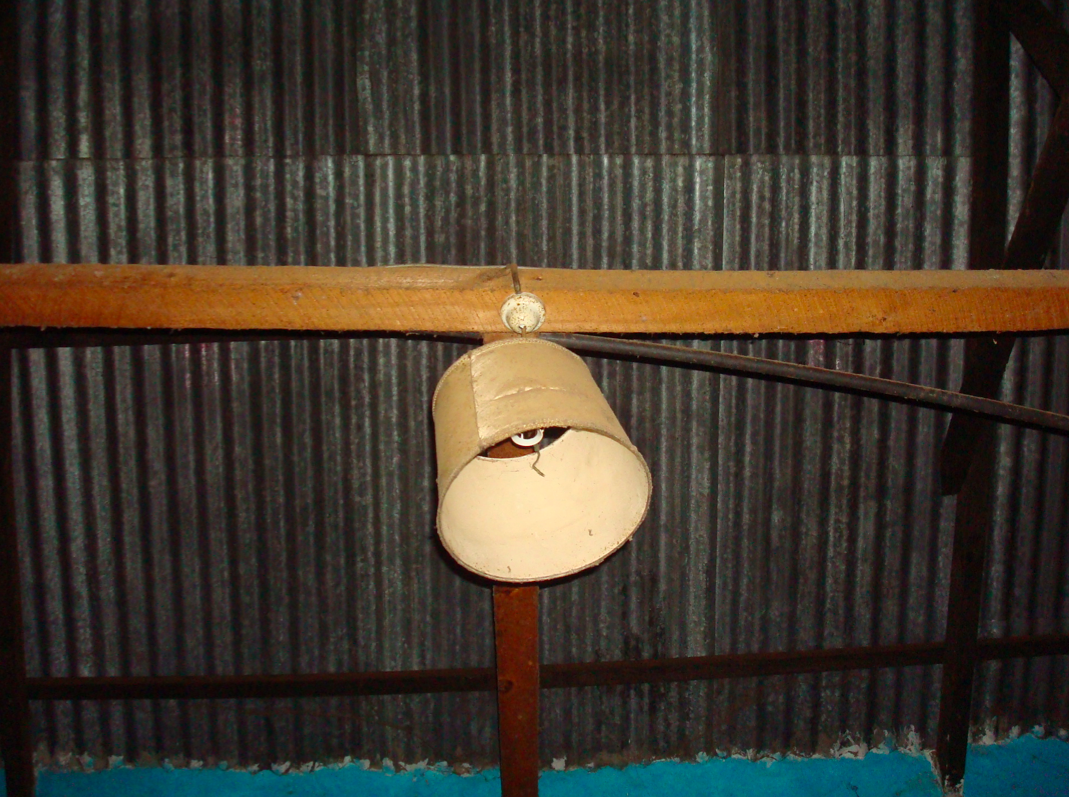
Wired house before the grid was even available in the area (Photo credit: Niti Bhan)
This very much triggers my thoughts. Both examples are from widely different environments, but show the same type of judgment call about a very uncertain outcome. Could we be looking at the same thing here? Would that mean that we could thus better understand entrepreneurship and people who live in the operating environment of the informal economy, by relating the effect of uncertainty to decision making?
The only article which comes remotely close to this question, is a psychology experiment set up by Chip Heath, and Amos Tversky. A gem of an article, but very little used since publication, so I’ve learned by Chip himself. The article indicates that competence and aspiration seem to lower people’s thresholds to actively engage and invest, under conditions of uncertainty.
Would it be worthwhile to define personas on such basis? To inform accelerator programs on the people they’re funding? To engage with specific farmers in development programs in the informal economies in developing countries? To find the early adopters of the internet in emerging markets? I’d love to hear your thoughts!

 Partnership Design